Fiber density is usually treated as an easy win: more ports in the same rack space, more capacity without expanding the footprint, and more room to support higher-speed networks, AI infrastructure, and future growth.
While those gains matter, every increase in density creates a physical trade-off. When connectors move closer together, the space around each connection gets smaller. The panel may carry more fibers, but the technician has less room to grip, route, inspect, clean, or remove them.
That is where high-density design becomes more complicated than port count.
A layout can look efficient on paper and still create problems in the field. The real question is not only how many connections fit into the panel. It is whether those connections can still be handled after the panel is full.
Theoretical Density vs. Operational Access
There are two ways to look at density.
Theoretical density asks: how many ports can fit in the available space?
Operational access asks: can those ports still be installed, routed, tested, cleaned, and serviced without unnecessary disruption?
Both questions matter. A design that only answers the first one may reduce rack space while creating friction everywhere else. A technician may need to move one jumper to reach another. A latch may be blocked by neighboring connectors. A cable may exit cleanly in an empty panel, then become difficult to manage once adjacent ports are populated.
This is where density stops being a layout exercise and becomes a usability issue.
Crowded Panels Change the Work
In lower-density environments, standard formats such as LC and MPO often provide enough room for straightforward handling. A technician can see the port, grip the connector body, manage the cable, and confirm engagement without much interference.
In a crowded 1U or 4U patching area, the same task changes.
Connectors sit closer together. Visibility drops. Cable paths tighten. Fingers have less room to reach the release point. A simple removal task may require more careful movement around live neighboring links.
None of this means traditional interfaces are flawed. LC and MPO remain essential across many networks. The issue is that higher density changes the working conditions around them.
When the space gets tighter, small mechanical details become more important.
Cable Routing Can Decide Whether Density Works
Density is often measured at the front of the panel, but the cable path behind each connection matters just as much. Once a connector is installed, the cable has to bend, route, and remain serviceable without fighting the layout.
If the boot is too long for the available space, it can push the cable into an awkward path. If the cable exit direction does not match the panel design, slack can build up in the wrong place. If too many cords crowd the same access area, lower or inner ports may become harder to reach.
This is where connector design becomes practical, not cosmetic.
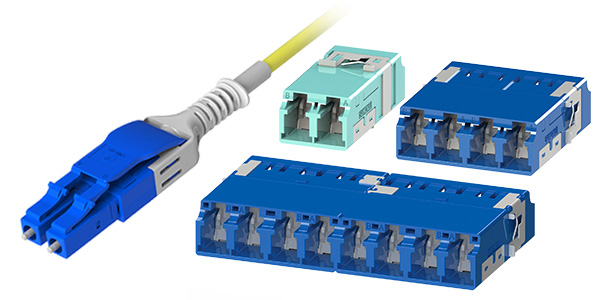
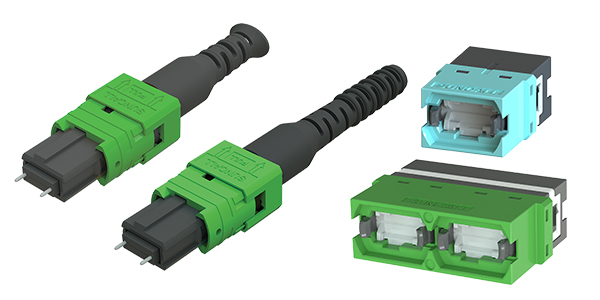
LC Push-pull designs can make removal easier when fingers cannot comfortably reach a latch. MPO Short-boot options can help manage constrained routing. Pull-boot features can reduce the need to pinch small connector bodies in dense panels. Compact adapter layouts can improve panel utilization while preserving more predictable access. Internal shutters can help protect unused or exposed ports during service without requiring separate dust caps at every opening.
These are not abstract improvements. They address specific problems created by density: limited reach, tighter routing, higher handling frequency, and greater risk of disturbing adjacent connections.
More Density Means Less Margin for Workarounds
In a small installation, a handling inconvenience may not matter much. A technician finds a workaround, adjusts the cable, or spends a few extra seconds on the port.
At scale, those seconds and workarounds add up.
A repeated handling issue can slow installation. A routing compromise can create stress near the interface. A difficult-to-reach release point can increase the chance of disturbing neighboring links. A maintenance task that should be simple can become more difficult because the layout leaves no room for normal hand movement.
Dense environments are less forgiving because there are more connections, less open space, and more active links nearby. The hardware has to reduce unnecessary variation instead of adding to it.
The Best Density Is Usable Density
There is no single density target that fits every network. A hyperscale data center, telecom cabinet, enterprise cross-connect, and OEM equipment design may all require different trade-offs.
In one application, maximum port count may be the priority. In another, frequent front access may matter more. In another, cable routing inside the equipment may define the connector or adapter configuration. The best design depends on how the connection will actually be used.
That is why density should be evaluated together with access, cable movement, protection, and maintenance. Port count is only one part of the equation.
The stronger question is: what does the higher-density design make easier, and what does it make harder?
Conclusion
Higher fiber density is necessary in many modern networks, but density alone is not the objective. A compact layout still needs to support clean installation, controlled routing, reliable inspection, and service without unnecessary disruption.
Addressing that balance requires hardware designed around real technician interaction: how the connector is gripped, how the boot routes the cable, how the adapter protects the port, and how the connection behaves after the panel is fully populated.
Suncall America develops precision fiber optic connectors and adapters for high-density and application-driven environments. With solutions such as push-pull connectors, pull-boot designs, short-boot options, compact adapters, and internal shutter adapters, Suncall helps customers build connectivity systems that are not only space-efficient, but practical to install and maintain.
Suncall America develops precision fiber optic connectors and adapters used in high-density network environments. This article is part of an ongoing effort to share practical insights on connectivity challenges in modern data center infrastructure.*